
From the "Ticket-Stub Economy" to "Exhibition+": How Show Traffic Is Becoming Lasting Urban Consumption
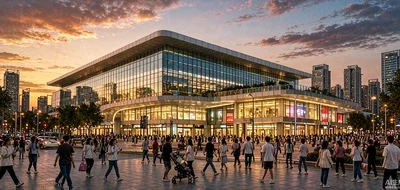
In 2026, deeper integration between the exhibition economy and urban consumption has become a core strategy for many cities to stimulate domestic demand. Innovative models such as the "ticket-stub economy" are converting the momentary footfall a show brings into sustainable urban consumption.
What else can an exhibition ticket do besides get you in the door? In China's major exhibition cities in 2026, the answer is: it can stack with shopping-district discounts, scenic spot visits and performance offers. This model, known as the "ticket-stub economy," is reshaping the relationship between exhibitions and their host cities.
Beijing: top-level design first. In March this year, the Beijing Municipal Commerce Bureau released the "Three-Year Action Plan for High-Quality Development of Beijing's Exhibition Industry (2026–2028)," which, among 24 specific measures, explicitly incorporates the development of a city-wide "ticket-stub economy" into its "Exhibition+" integration initiatives. Data shows that the total revenue of Beijing's above-designated-size exhibition companies ranks first in the country, accounting for roughly a quarter of the national total, and the city now has 11 professional exhibition venues of over 10,000 square meters each. Beijing has also proposed building a "15-minute exhibition life circle," promoting mutual recognition of show tickets with shopping districts, scenic spots and performances.
Shanghai: visible results on the ground. Shanghai took the lead in incorporating the "ticket-stub economy" into its special action plan for expanding consumption, building a city-wide network spanning 16 districts and more than a thousand merchants. At the China (Shanghai) International Technology Fair, for example, the eight major shopping districts around the venue attracted over 300,000 consumers, up 67.3 percent year on year; during the China International Import Expo, a single ticket or badge offered exclusive discounts at more than 1,200 merchants, covering scenic spots, ancient towns, museums and restaurants.
More examples of show-city integration. During the 114th China Food and Drinks Fair, Chengdu launched a nearly month-long "Spring Sugar Season," extending the show's momentum from the venue to shopping districts, scenic spots and communities across the city, drawing more than 410,000 industry attendees. At this September's China International Fair for Trade in Services (CIFTIS), the core activity area welcomed nearly 420,000 visits over five days, up 36.6 percent year on year, driving about 810,000 visits to the Shougang Park area.
This trend carries implications for both exhibitors and organizers: the value boundary of a show is expanding. A show is no longer just a few days of booth exposure, but a combined scenario of "in-depth business talks inside the venue plus brand penetration outside it." For brands, integrated communications around a show and designing the booth as a shareable "photo spot" can deliver exposure returns far beyond the exhibition period. For exhibition service providers, this means moving beyond mere construction and execution toward full-service understanding of clients' marketing goals.
The exhibition industry's role as a "super hub" for industrial integration is becoming clearer — it connects not only buyers and sellers, but also industries, cities and consumption.